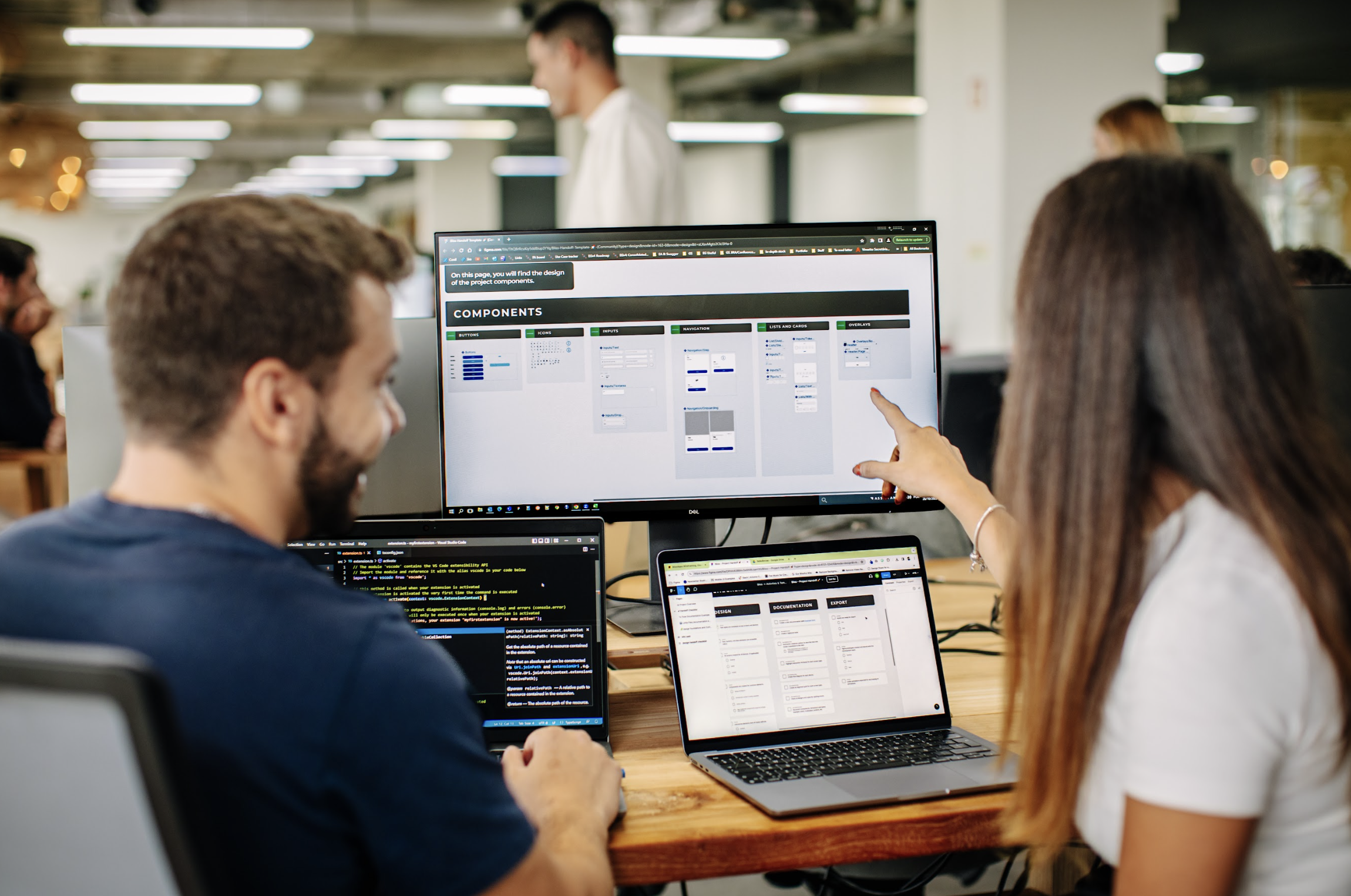

Engineering excellence is the secret ingredient that transforms ordinary software teams into high-performing, innovative powerhouses. It’s a multifaceted approach encompassing technical expertise, organizational culture, and a relentless pursuit of improvement.

Insights
22 results
Let’s be honest. “Data preparation” isn’t the sexiest topic in the tech world. It often sounds like the digital equivalent of washing dishes— a necessary, tedious chore you must complete before enjoying the meal (or the insights).
As part of our ongoing commitment to international growth and strategic expansion, André Gil (CEO) and Pedro Varela (Head of Commercial and Partnership) from Bliss Applications recently completed a successful 5-day business trip to the Middle East, visiting Dubai and Qatar.
Leaders’ characteristics have been adapting over time, seeking to ensure a context of sustainability in their strategic thinking and actions.
We live in a world that overloads us with information, stimuli, and challenges. We make decisions from the second we wake up until the moment we go to bed. To deal with this complexity, we look for unconscious and conscious patterns that help us understand and navigate our surroundings – small internal compasses that guide us through the experiences and information we absorb. These compasses we call “mental models.”
Let’s imagine the following scenarios: 1) a psychologist is in a session with a patient, and 2) a UX professional is in an interview with a user. The challenge for the reader is: who said the phrases “And how does that make you feel?”, “Is there anything else you would like to share?” “There are no right or wrong answers”?
Any digital product is distributed to its users through channels such as smartphones, computers, and others. User experience is crucial to their success, and there is only a good UX with a good engineering process. This inseparable connection requires an extended implementation of the software development lifecycle (SDLC) so that engineering has the best possible information during implementation and can materialize the idea of the product as imagined.
When we observe the e-commerce phenomenon in the food retail sector, we identify its growth potential. In global terms, Insider Intelligence projections confirm this trend: by 2026, it is expected that 24% of retail purchases will be made online, reaching 8.148 trillion dollars.
Every year, technological trends emerge and endless lists of areas, tools, systems, etc., which in the new year will dictate progress, innovation, and evolution on the right path of technology and derivatives. Last year I talked about six technological trends, but this year I only intend to focus on three to be more objective.
When I finished college, my first application was to Linden Labs. This San Francisco company created the virtual community Second Life, a world for residents to create the digital life they wanted. At the time, even though I was familiar with the world of e-sports, I believed there was a future there—spaces where reality blends with the digital and where the limitations of earthly life become dependent only on our imagination.
Emotional design is the art of crafting products that evoke emotions, resulting in positive and impactful experiences for the user. According to Donald Norman, author of the book “Emotional Design,” “it is not enough to build products that work and are understandable and usable. We also need to build products that bring joy and excitement, pleasure and fun, and beauty to people’s lives.”
From AI to quantum computing, and even climate change, here’s some of the emerging tech trends that will be influencing our digital world in 2023. Today, I’m talking about technology or at least topics related to this field that we’ll start hearing about, discussing, and seeing evolve by 2023. There are six of them, but they could be another six or even more.
Last year, Apple finally brought one of the most requested features to their ecosystem: widgets. Along with their incredible popularity at launch, the ability to create custom icons (i.e., shortcuts that each launch a specific app) ushered a new wave of customization. This trend went viral, and it didn’t take long for users to share their works of art all over the Internet.
At Bliss Applications, we’ve been using Jenkins as a CI/CD system for some time now. It works. It served its purpose… but it’s time to move on. This article does not intend to be a Jenkins vs Azure DevOps essay, but more of a “these were our issues and needs, this was the strategy we’ve chosen for our specific case and this was our experience while implementing it”. Which means this is certainly not a golden solution for everyone.
I’m developing a step sequencer with the help of Vue.js and Tone.js.
Recently I had to address an interesting UX problem. There was the need for small controls for each track, in the sequencer.